Single Bevel vs Double Bevel: Which Japanese Knife Should You Buy First?

By Ben Stieger, Founder of Chefs Edge
1:13 watch
Chapters
0:00 The question
0:08 The mistake I made
0:22 What single-bevel is for
0:42 Why double-bevel for everyday
0:58 Which should you buy first

Single bevel or double bevel? Here's what you need to know before you buy your first Japanese knife.

The Mistake I Made

If you're just getting started with Japanese knives, you might hear the words single bevel or double bevel. For almost all use cases at home, double bevel is the one that you're going to need.

I made this mistake when I purchased a single-bevel knife many years before I started Chef's Edge, thinking I was getting a general-purpose chef knife. I was not.

What a Single-Bevel Knife Is For

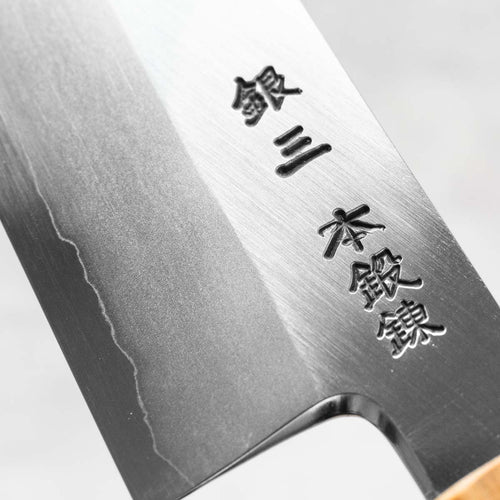
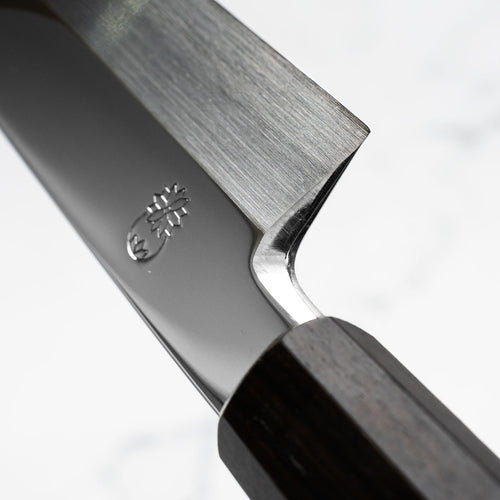
A single-bevel knife has a bevel ground on one side and is hollow ground on the other. These single-bevel knives are almost exclusively for specialty tasks like breaking down and slicing fish and seafood.

If you try and make a cut through a vegetable with a single-bevel knife, the bevel on the one side will push the knife in one direction as you cut. Not very good for your everyday prep.

Why Double-Bevel Is Right for Everyday

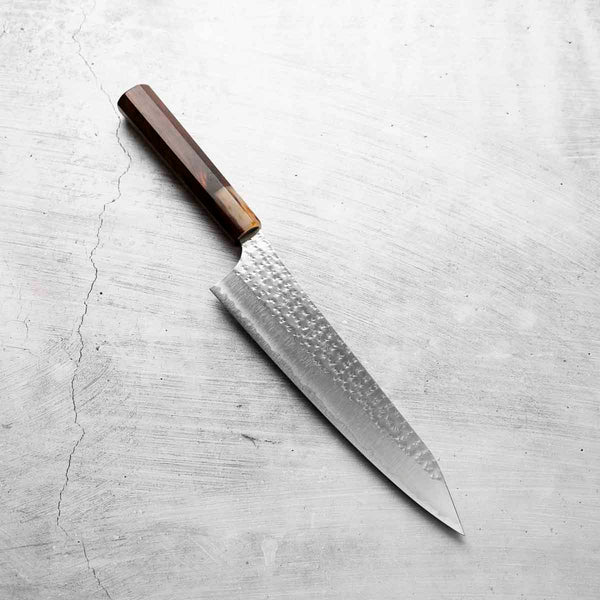
A double-bevel knife is symmetrically ground on both sides. This ensures that when you're cutting up and down, the knife follows the up-and-down direction rather than being dragged to one side. This means that a double-bevel knife is perfect for your everyday prep at home.

Which Should You Buy First?

By all means, if you are getting into breaking down whole fish, then a deba or a single-bevel knife might be something you want to add to your collection. But if you're buying your first knife, or you're just getting started with Japanese knives, check the product to make sure it is a double-bevel knife. This one will serve you well every day.

Our Recommendations
Frequently Asked
What is the difference between a single-bevel and a double-bevel knife?

A single-bevel knife has a cutting edge ground on only one side; the other side is flat or hollow-ground. A double-bevel knife is ground symmetrically on both sides. Double bevels track straight through food; single bevels push to one side because of the asymmetric grind.

Are all Japanese knives single-bevel?

No, this is a common misconception. Most modern Japanese kitchen knives (gyuto, santoku, bunka, nakiri, petty) are double-bevel. Single-bevel knives are the traditional specialty shapes like deba (fish butchery), yanagiba (sashimi slicing), and usuba (vegetables in Japanese cuisine).

Can a beginner use a single-bevel knife?

Not for general prep. The one-sided bevel steers the blade off-line on vertical cuts, which makes precise cutting difficult. Single-bevels are also harder to sharpen properly and require dedicated technique. Get comfortable with double-bevels first, then add a single-bevel for the specific task it suits.

When should I add a single-bevel to my collection?

Once you regularly break down whole fish. A deba for heavier cutting through fish heads and small bones, or a yanagiba for slicing sashimi and sushi. Both are single-bevel and purpose-built for those tasks, and both make a real difference over trying to do the same work with a double-bevel gyuto.