
Sort by
Sold Out
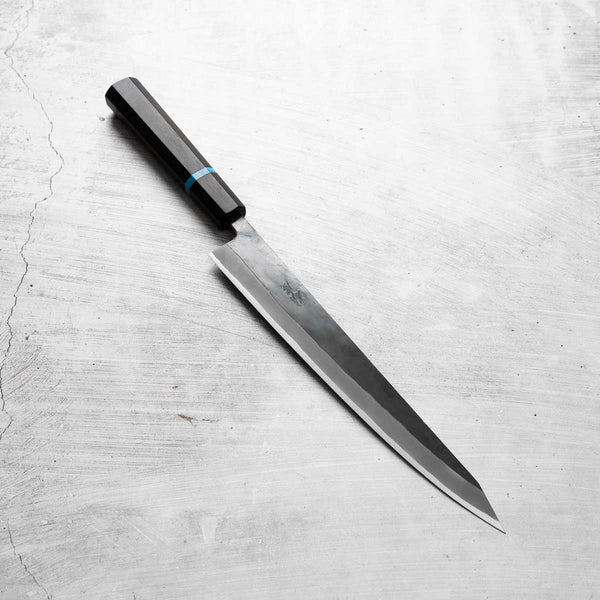
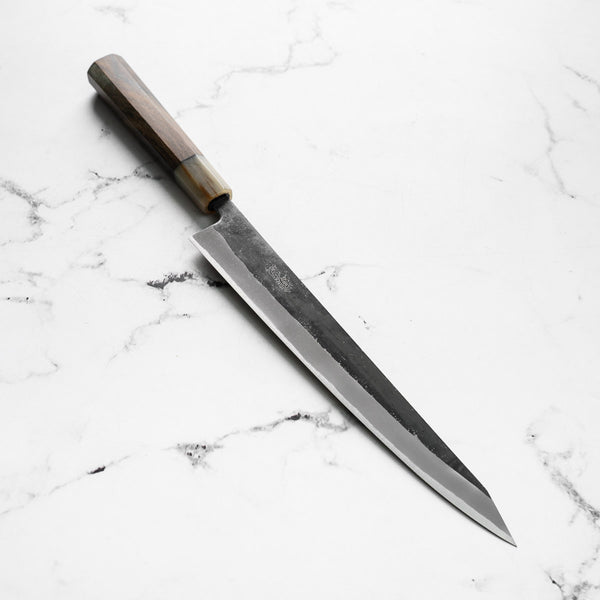
Seido "Kuro" x Tadafusa White 2 Kurouchi Sujihiki 240mm - Ebony & Turquoise
★★★★★
★★★★★
(1)
$198.00 USD
Sold Out
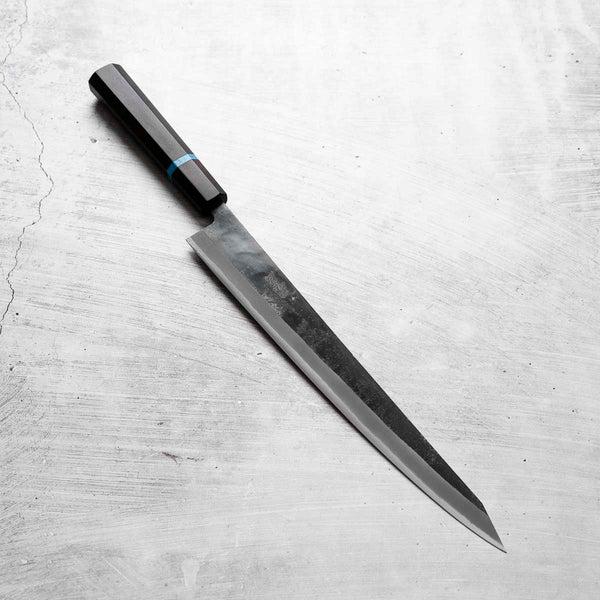
Seido "Kuro" x Tadafusa White 2 Kurouchi Sujihiki 240mm - Persimmon
$198.00 USD
Sold Out
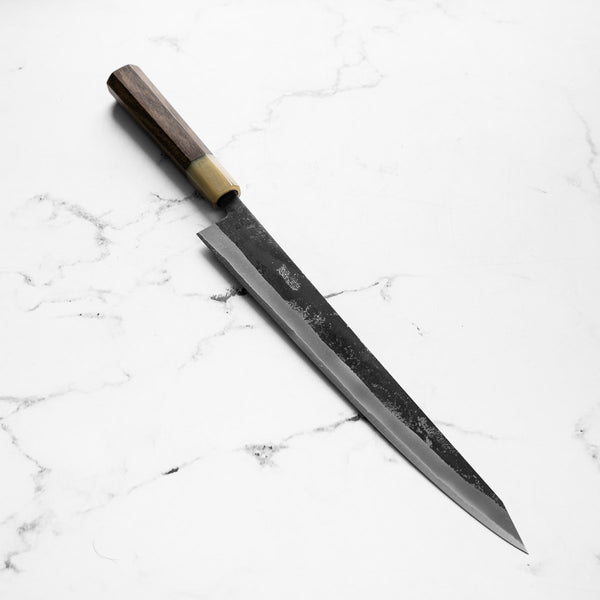
Seido "Kuro" x Tadafusa White 2 Kurouchi Sujihiki 270mm - Ebony & Turquoise
★★★★★
★★★★★
(1)
$220.00 USD
Sold Out
Seido "Kuro" x Tadafusa White 2 Kurouchi Sujihiki 270mm - Persimmon
★★★★★
★★★★★
(1)
$220.00 USD
Filter & Sort
Sort By

◆ Common Questions
Shopping for Japanese Sujihiki Knives
What is a sujihiki used for?
The sujihiki is a Japanese slicing knife designed for carving proteins, roasts, briskets, hams, or large pieces of cooked meat. Double-bevel (ambidextrous), longer than a gyuto, with a thinner blade for clean draw-cuts through muscle fibre.
Sujihiki vs yanagiba: which slicer should I pick?
Yanagiba is single-bevel, built specifically for sashimi, raw fish slicing. Sujihiki is double-bevel, a Western-style slicer for cooked proteins. If you work with raw fish, yanagiba. For roasts, carvery, and general slicing, sujihiki.
What size sujihiki should I buy?
240mm handles most home cooking. 270mm is popular for larger pieces or BBQ work. 300mm is specialist, pro-chef territory. Shorter 210mm sujihikis exist but offer less slicing reach.
Can a sujihiki replace a gyuto?
For prep work, no, sujihiki is too thin and specialised for general chopping. But as a dedicated carver alongside your chef knife, a sujihiki pairs beautifully with a gyuto in a 2-knife kit.
Why is a sujihiki better than a Western carving knife?
Japanese sujihikis are thinner, harder, and sharper than Western carving knives. The thinner blade glides through meat with less sawing (preserves texture); the harder steel holds the edge longer. The tradeoff is more careful handling.