
Sort by
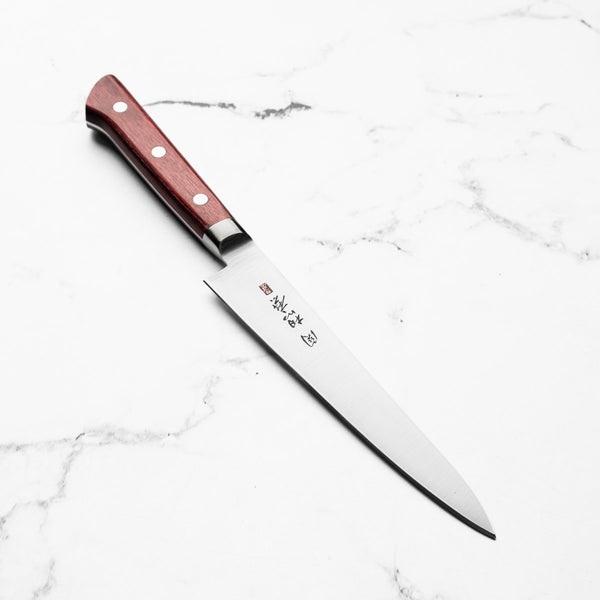
Seki Souma (Formerly FKM) Petty 150mm - Red
$73.00 USD

Seki Souma (Formerly FKM) Petty 150mm - Black
★★★★★
★★★★★
(1)
$68.00 USD

Sold Out
Fujiwara Kanefusa FKM Deba 150mm
★★★★★
★★★★★
(1)
$99.00 USD

Sold Out
Fujiwara Kanefusa FKM Gyuto 270mm
★★★★★
★★★★★
(3)
$122.00 USD
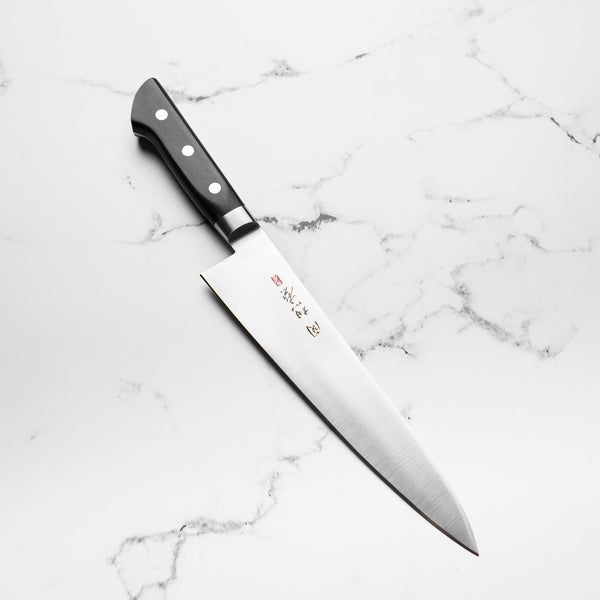
Sold Out
Seki Souma (Formerly FKM) Gyuto 210mm
★★★★★
★★★★★
(2)
$99.00 USD

Sold Out
Seki Souma (Formerly FKM) Petty 120mm
★★★★★
★★★★★
(1)
$68.00 USD

Sold Out
Teruyasu Fujiwara White 2 Nashiji Gyuto 210mm - Dark Maple
$380.00 USD
Filter & Sort
Sort By

◆ Common Questions
Shopping for Shop All Japanese Chef Knives
What makes a Japanese chef knife different?
Japanese chef knives are typically harder, thinner, and sharper than Western equivalents. The steel is harder (60+ HRC vs 56-58 HRC for German), the grind is thinner behind the edge, and the result is better precision and edge-holding at the cost of more careful handling.
What's the best first Japanese knife?
For most home cooks, a santoku or gyuto around 165-210mm in a stainless steel like VG10 or Ginsan. Low maintenance, versatile, forgiving for someone new to Japanese knives.
Carbon vs stainless Japanese knives: which should I buy?
How do I care for a Japanese knife?
Hand wash only, dry immediately, store on a magnetic strip or in a knife roll, sharpen regularly on a whetstone, never use glass or stone cutting boards (soft wood or plastic only).
How often should I sharpen my Japanese knife?
Home cooks using daily: full sharpen every 2-3 months on a whetstone. Pro chefs: weekly. Honing (realigning the edge) between sharpenings keeps the edge straight.